

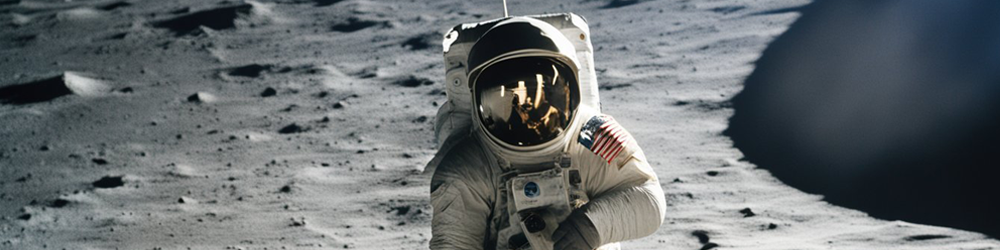
The Apollo 11 mission, launched by NASA in 1969, was a historic milestone as it marked the first time humans set foot on the Moon.
Astronauts Neil Armstrong and Buzz Aldrin landed on the lunar surface on July 20, 1969, while Michael Collins orbited above in the command module.
Armstrong’s famous words, “That’s one small step for man, one giant leap for mankind,” captured the momentous achievement of the mission.
Apollo 11 demonstrated the capability of human space exploration, brought back valuable lunar samples, and inspired generations to pursue scientific discovery and exploration.
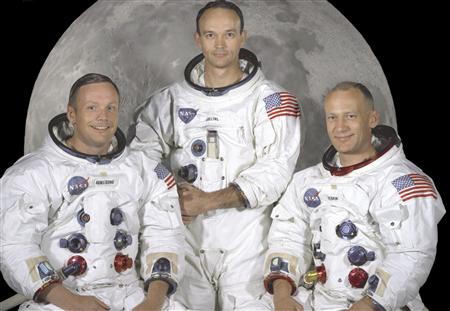
The first manned mission to land on the Moon.
Neil Armstrong and Buzz Aldrin became the first humans to walk on the Moon, while Michael Collins orbited above in the command module.
Successful landing and return, advancing human space exploration and scientific knowledge of the Moon.
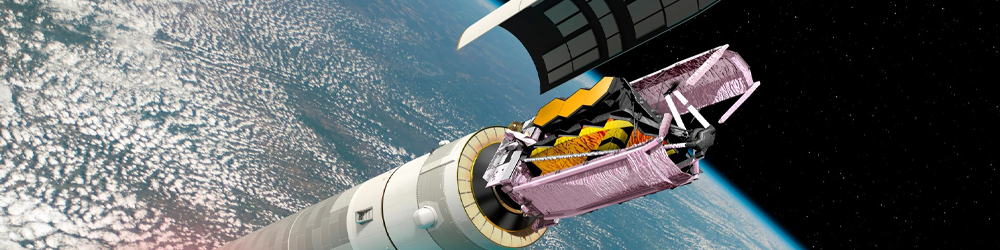
The James Webb Space Telescope (JWST), launched in 2021, is the most powerful space telescope ever built, designed to study the universe with unprecedented detail.
Positioned at the second Lagrange point (L2), it uses advanced infrared technology to observe distant galaxies, stars, and exoplanets, looking further back in time than ever before.
JWST has already delivered stunning images and data, revealing new insights into galaxy formation, star birth, and atmospheric conditions on exoplanets. Its discoveries are expected to transform our understanding of the cosmos and answer fundamental questions about the origins of the universe.
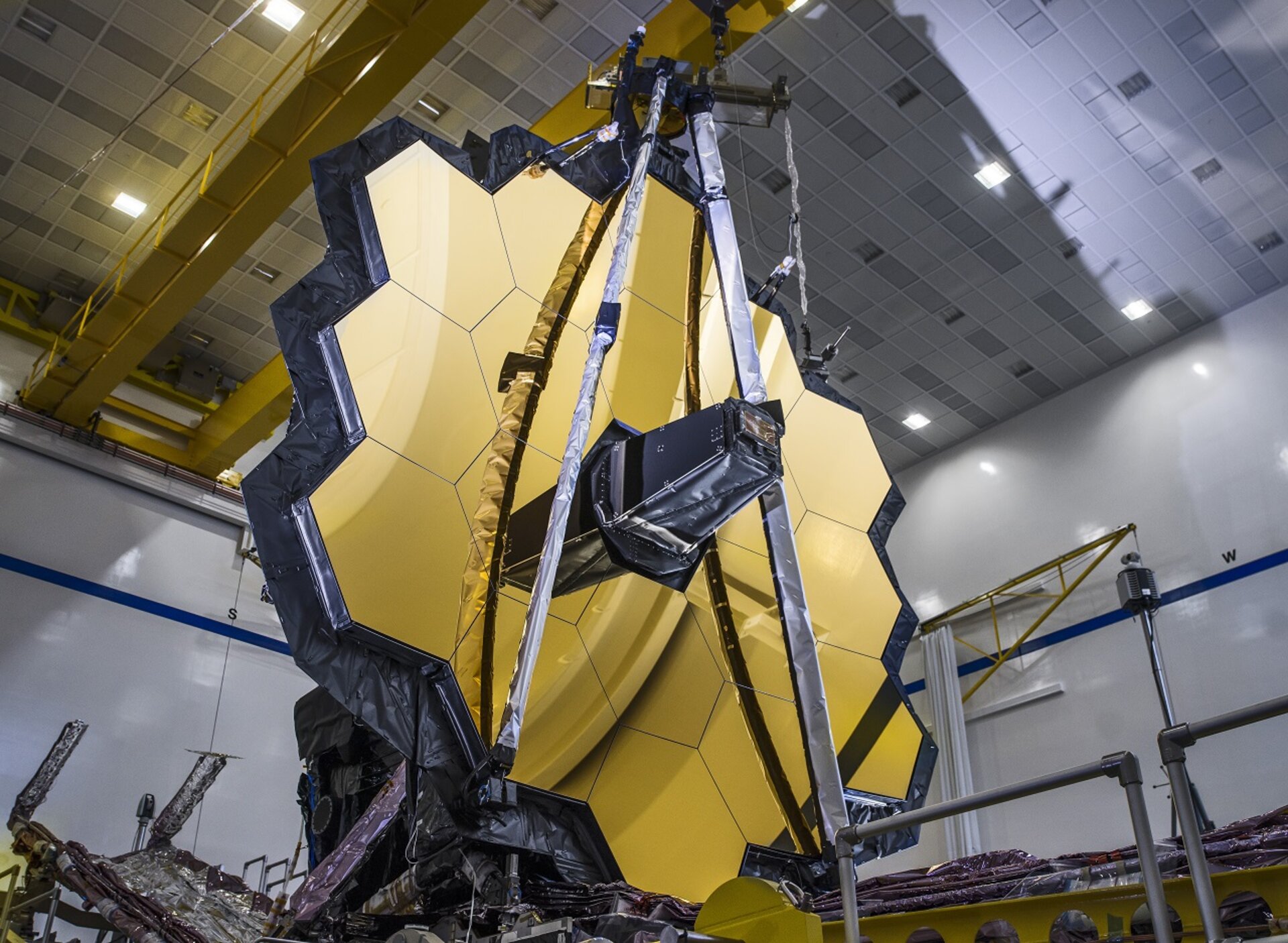
To study the formation of stars, galaxies, and planetary systems with unprecedented detail.
Positioned at the second Lagrange point (L2), JWST has already provided stunning images and data, offering insights into distant galaxies and exo planets.
Ongoing mission expected to transform our understanding of the universe.